

Welcome to another edition Doomscrolling With - a new series in which I corner smart people in the GOP campaign ecosystem and force them to answer my questions about data, digital, fundraising, advertising, and whatever else I happen to be hyper-fixated on at the moment!
This week we’re talking to the one and only Jordan freaking Lieberman about campaign spending, consultants, and this crazy industry of ours!
Now let’s get to some scrolling.
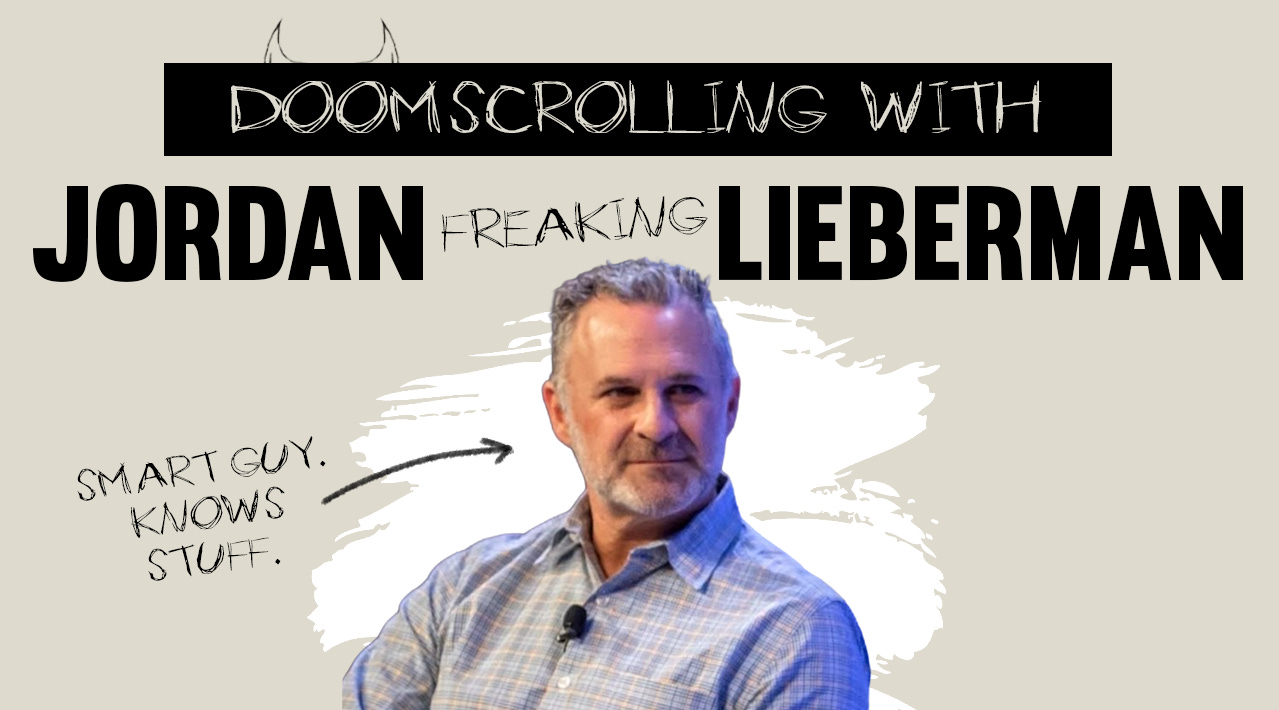
First of all, who are you and what do you do?
I’m Jordan Lieberman - CEO of Powers Interactive, a tech enabled media buying shop, focused on voter targeted and data driven digital ads. I’ve been here since running Campaigns & Elections magazine 2005 to 2010. I devote an unhealthy amount of time looking under the floorboards of our industry. I lived in DC for 23 years and spend my free time with large animals who don’t talk back.
You write a great Substack called Vendor Trap, which I’ve been loving. But what possessed you to start combing through FEC data in the first place? And after spending all that time in the data, what's the biggest disconnect you've found between how our industry thinks campaigns work and what the numbers actually show?
The work behind my Substack is part business intelligence for Powers Interactive. We’ve developed a relationship model of our neighborhood, covering 6 billion data points, 60 million transactions, and over 1 million vendor entities spelled every possible way. The writing you see just scratches the surface of what we see. I keep the good stuff for Powers.
The biggest disconnect? We assume the career ladder still works the way it used to. Most of us did time on campaigns or committees, and if you’re reading Doomscroll you probably figured it out, but the conveyor belt is broken.
What happened to make this career path so much harder than it used to be? Mentorship, upwardly mobile campaign gigs and field jobs, internships…. all measurably sinking. There is no pay premium for working on multiple campaigns, year after year. New firms’ share of all vendor relationships and total spending is down.
Channeling Ace Rothstein from Casino, people used to come up through the count room, where somebody older taught you where every dollar in the building went. Then it got easier to hire people who had never counted anything. Our count room was a field office, and we closed it during Covid. When nobody learns the craft, relationships become the only credential. That’s the opposite of the meritocracy I want my kids to live in.
One post I found particularly interesting was the one in June where you looked at 25 years worth of data and found that the single most important variable of a winning campaign’s digital operation was WHEN they started spending. Knowing that…how do you think Republicans are doing (on the spending front) at this point in this cycle?
I’ve had a series of nonpartisan and media jobs- a good place to zoom out. Most of the daylight around tactics between Republicans and Democrats is fiction. There are some things around the edges: Republicans earn slightly more on FEC trackable payrolls but that’s mainly because Democratic campaigns more often bulk up on reportable field staff late in the campaign. Even in the bowels of CA subvendor reporting, differentiation is lighter than cable news would have you believe.
When nobody learns the craft, relationships become the only credential.
Well, we know the bulk of campaign spending happens after Labor Day and a lot of that has to do with the fact that that’s just when candidates are able to raise more money. But should campaigns be putting more effort into trying to disrupt that cycle?
This will be the first and last time Celinda Lake is quoted in Doomscroll: Early Money is Like Yeast because it makes the dough rise. She didn’t invent the phrase but I learned it from her, so I’ll give her credit because it’s my interview.
Campaigns should raise early money. I’m just doubtful they actually can.
Let's talk about incentives and consultants. Consultants are hired and paid a retainer, but they also often get compensated again based on how money gets spent. As a consultant myself I’m a little nervous to see what you’ll say here…but do you think the incentive/ compensation structure is hurting our ability to run winning campaigns?
No. You get what you pay for. You can buy media from lots of people. You should not buy judgment or accountability from the low bidder.
We do not have a compensation problem. We do have a mentorship and “next generation” problem. The fastest way to scare off a smart future workforce is to dictate how much they should earn.
Ok, I’ll take it!
You spend a lot of time analyzing whether campaign spending actually makes sense. So turn that lens on your own industry for me: When you look at the way campaigns are spending on programmatic, what are we getting wrong? Don’t hold back!
Thanks Amanda for the invitation to burn this place down two months before Election Day!
Today I’ll pick on competitive intelligence not informing enough buys. The vast majority of buyers in this space do not have any sense for what their competitors or the competitors’ clients are doing.
I think if you are a real student of this, someone who cares about the craft as much as the profit, you must have the tools to zoom out. We built a tool for ourselves called Sentry and shared it with the world. In my view, technology wants to cost $0, we just helped it get there.
The next steps are predictive modeling. You can read a great deal about Katie Porter and Graham Platner’s mindset ahead of primary dates by looking closely at who gave up and who was in denial for too long.
You can buy media from lots of people. You should not buy judgment or accountability from the low bidder.
A while back you wrote something that I love, which is that CTV is a “digital ad wearing a television skin suit.” You wrote that campaigns often let their TV buyers handle CTV because those relationships go back a long time, even though the skill set required to buy it is fundamentally different. So what I think you’re saying (and don’t let me put too many words in your mouth!) is that the CTV problem exposes a much larger issue with the traditional campaign consulting model.
I’ll boil down what you are really asking…. Who deserves to get CTV budgets? I think you know my opinion. CTV is bought like a digital ad, measured like a digital ad, delivered like a digital ad. It’s the fastest growing tactic in our arsenal so I understand why the folks who mastered terrestrial radio buying in 1994 would want a piece of this.
Ha! Ok let’s end with the million-dollar question. Based on everything you’ve looked at, are campaigns today actually making rational, evidence-based spending decisions? And if not, what's the biggest thing standing in the way?
The industry is more tribal than rational. My campaign clients tend to be quick thinkers and generally talented. But who gets hired, who controls which budget, and which relationships persist are measurably determined by networks, history and tribes, and this is consistently misunderstood by newcomers with a new product or skill set.
I think the question you might be asking is, how do I break in as a consultant? The answer is surprisingly clear. Find yourself a rabbi. Work on a campaign, a committee. Then make friends with people outside of your tribe, because as tribal as hiring decisions are, long term career success has more to do with being the bridge.
Thanks for doomscrolling with us, Jordan!
