Dirty Business
Doomscroll 6.14.2026


Hello and welcome to another edition of Doomscroll - your favorite newsletter covering all things digital on the right! Hope everyone didn’t miss me too much last week. Let’s get to some scrolling!
This week’s edition of Doomscroll is sponsored by Reset Creative - Thank you! Scroll down for a Q&A with founder Kevin Rose.


Thanks to everyone who answered the previous One Question about the importance of Trump’s endorsement in a Republican primary. 100% of you said: it just depends. I mean…you’re not wrong. Here are some comments:
The Trump endorsement is obviously extremely helpful BUT work must be done by the endorsed campaign to boost both the name ID and the “Trump-endorsed” message. Far too many candidates take the Trump endorsement and think they’ve won without ensuring their name ID is high enough for folks to know that he/she is the Trump endorsed candidate.
I think Trump has gotten better at choosing who to endorse but it’s still not a golden scepter. In Texas - that one was easy but less see what happens with the SC Governor and Senate races.
In most situations a Trump endorsement would make the difference. Yet, as the saying goes, “all politics is local.” Cassidy was going down regardless. Before Trump’s endorsement of Paxton, a WH internal poll showed Paxton up by 12; he won by 28. In Iowa, the Trump-endorsed Rep. Feenstra, running for governor, was shut out of the runoff. This was Trump’s first statewide defeat. Why did it happen? Because Feenstra was a lousy, entitled, arrogant candidate who wouldn’t debate, do appearances, etc. He thought he had it in the bag. Hence, a Trump endorsement will not save a flawed candidate, or flawed campaign.
Ask Sid Miller, incumbent Ag Comms in Texas who lost. It can’t save a bad candidate. I think we’ll see the same thing in OK where he endorsed Mike Mazzei.
I tend to agree with the people who said a Trump endorsement is certainly helpful, but it’s not necessarily going to ALWAYS push a flawed candidate across the finish line. And even if the candidate IS a good candidate - it may not be that simple. We just had primaries in South Carolina and the Trump-endorsed candidate for governor, Lt. Gov. Pamela Evette, didn’t get enough votes to avoid a run-off. And I don’t *think* it’s because she’s flawed; I think it’s because there were 4 other Trump-y candidates in the race who had some loyal followings - endorsement or not. But we’ll see what happens in the Palmetto State on June 23!
Ok, for this week’s One Question I’m relying a bit on my fellow newsletter-writer Eric Wilson (hi, Eric!). Last week, his Center for Campaign Innovation published a report that can - perhaps - help explain why Republicans feel like our emails don’t land in inboxes the way they should. The culprit? Our fragmented ecosystem. We don’t have a dedicated, political, Republican ESP. We send from multiple IP addresses...But here’s the million-dollar question:
The strategic question then becomes whether to keep accepting the structural disadvantage of fragmented sending, or to work towards building the missing infrastructure.
The technical requirements are straightforward, but the real challenge is coordinated demand across the ecosystem and the willingness of right-of-center digital agencies to operate on a true shared-infrastructure provider rather than per-client solutions.
And there you have it. This week’s One Question. Do Republicans need our own dedicated ESP that we coalesce around (like the Dems do with NGP Van)? Is that the answer? Are our inboxing woes really a tech problem that’s in need of a tech solution? Sound off!

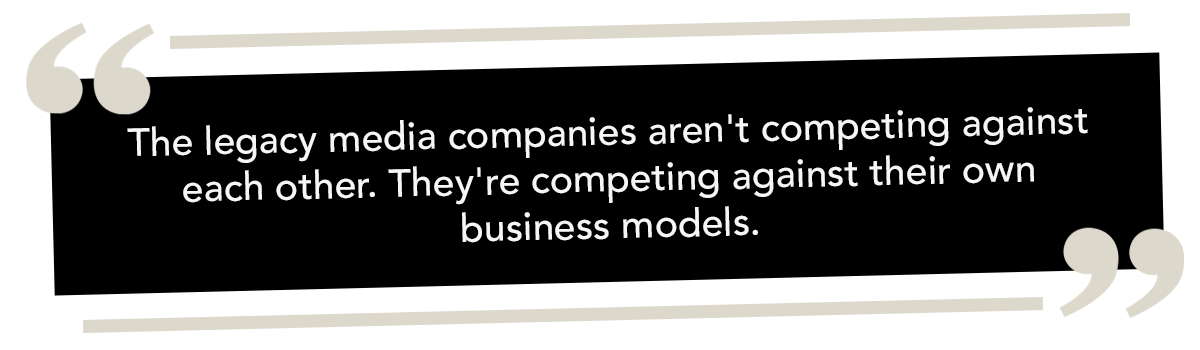

The above quote comes from Michael Beach in a recent issue of “State of the Screens” about the eternal tension between linear and streaming - what kind of success matters these days and the “innovators dilemma” legacy media companies are facing. It really is a good read, and you should check it out if you haven’t already. This whole dynamic is fascinating to me: winning the “TV season” does NOT equate to winning the future of TV. At least, not anymore. The companies that win the future will be the ones that abandon their linear-first business models and fully embrace streaming. It is what it is, folks. We don’t make the rules! Just a thought.

—Slumdog Slime
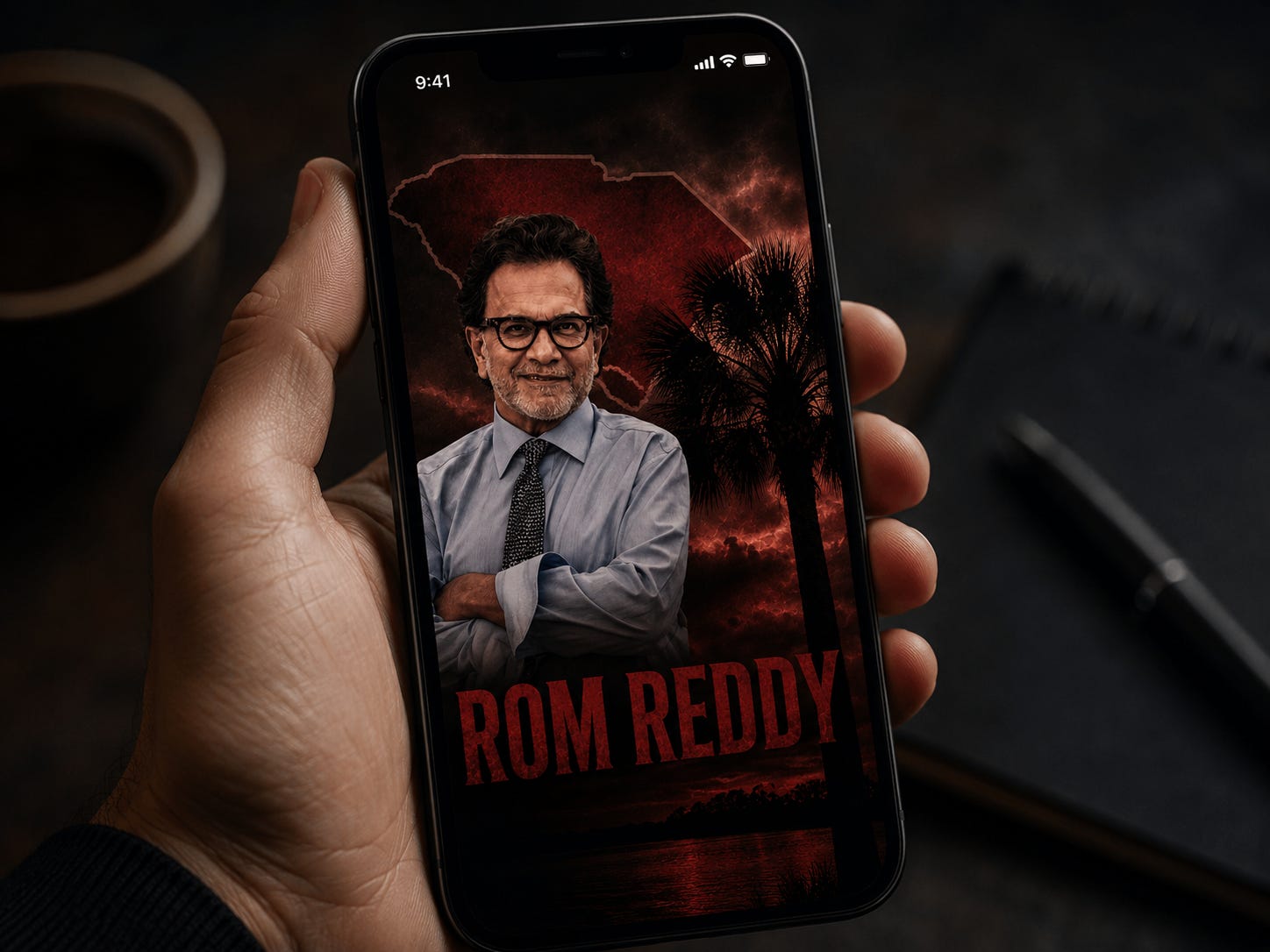
Well guys, we’ve always known South Carolina politics can be nasty. Just ask Nikki Haley or John McCain. I mean, you don’t just spawn a consultant like Lee Atwater without something being in the water…just sayin’. Anyway, why am I bringing this up? Because Palmetto State sliminess reared its ugly head once again last week in the run-up to the June 9 primary. See below.
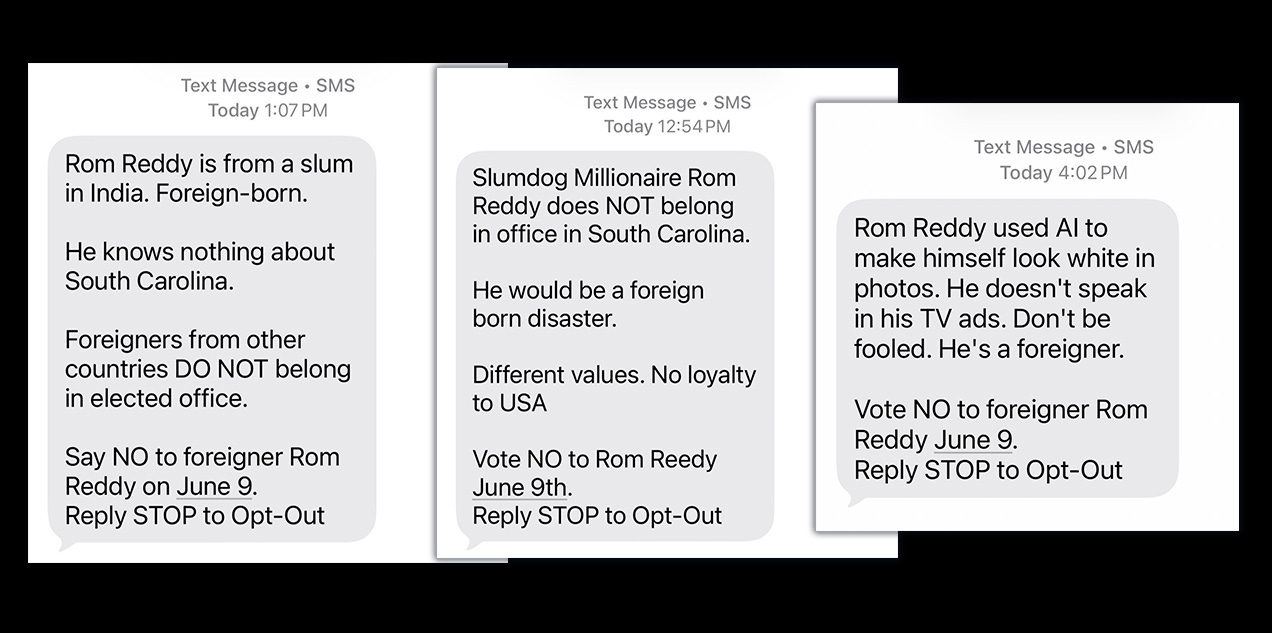
Gross.
I’ve written about Rom Reddy before in Doomscroll, even highlighting his campaign website a while back. His team did some innovative stuff during the primary, including sending out a legit “Reddy Room” newspaper and hosting tele-town halls. He didn’t fundraise - on purpose - and had probably the best response to NOT getting the Trump endorsement that I’ve seen from any candidate.
Yes, he’s from India. Not sure why that matters, though, and I’m not sure who thought these texts were worth sending. Are they why Reddy ultimately came in fourth place? It’s hard to say, although I certainly hope that voters of South Caroina are better than that. And as much as I’m tempted to speculate here on who was behind them, I’ll keep those thoughts to myself for now (FOR NOW).
Look, I’m the first one to acknowledge politics can be a dirty business. I’m the first one to point out that when you’re paid to win elections, it’s can be easy - and tempting! - to move the goalposts of what’s acceptable. It is what it is. But I’d also be lying if I didn’t say these texts really make me second guess the rules around political texting. If you’re a group, consultant, or campaign that wants to throw around these kind of attacks, you should be willing to put your name on them. That’s all I’m saying. And if you’re not…should you be forced to? Does the world of texting need some guardrails that say “Hey, you can send whatever text you want, but you have to disclose who you are?”
Messages arrive one phone at a time, often with little context about who paid for them. They exist largely outside public view - unless a recipient screenshots them and shares them, nobody knows they ever happened. I’d be willing to bet this messaging never appeared in a Meta ad. I’d be willing to bet it never ran on Google. I’d be willing to bet it never showed up on a television screen or a mail piece, either.
And like I said…at the end of the day, I get the tactic. And I’m not usually one to call for regulating my own industry. I’m not even sure that’s what I’m doing right now! But let’s be real here: the more this kind of stuff gets sent (and there’s probably way worse out there, tbh) the more we’re GOING to get looked at and lawmakers are GOING to want to make this a thing. At a minimum, I at least think this is a conversation worth having amongst ourselves.
—Unfit for Maine
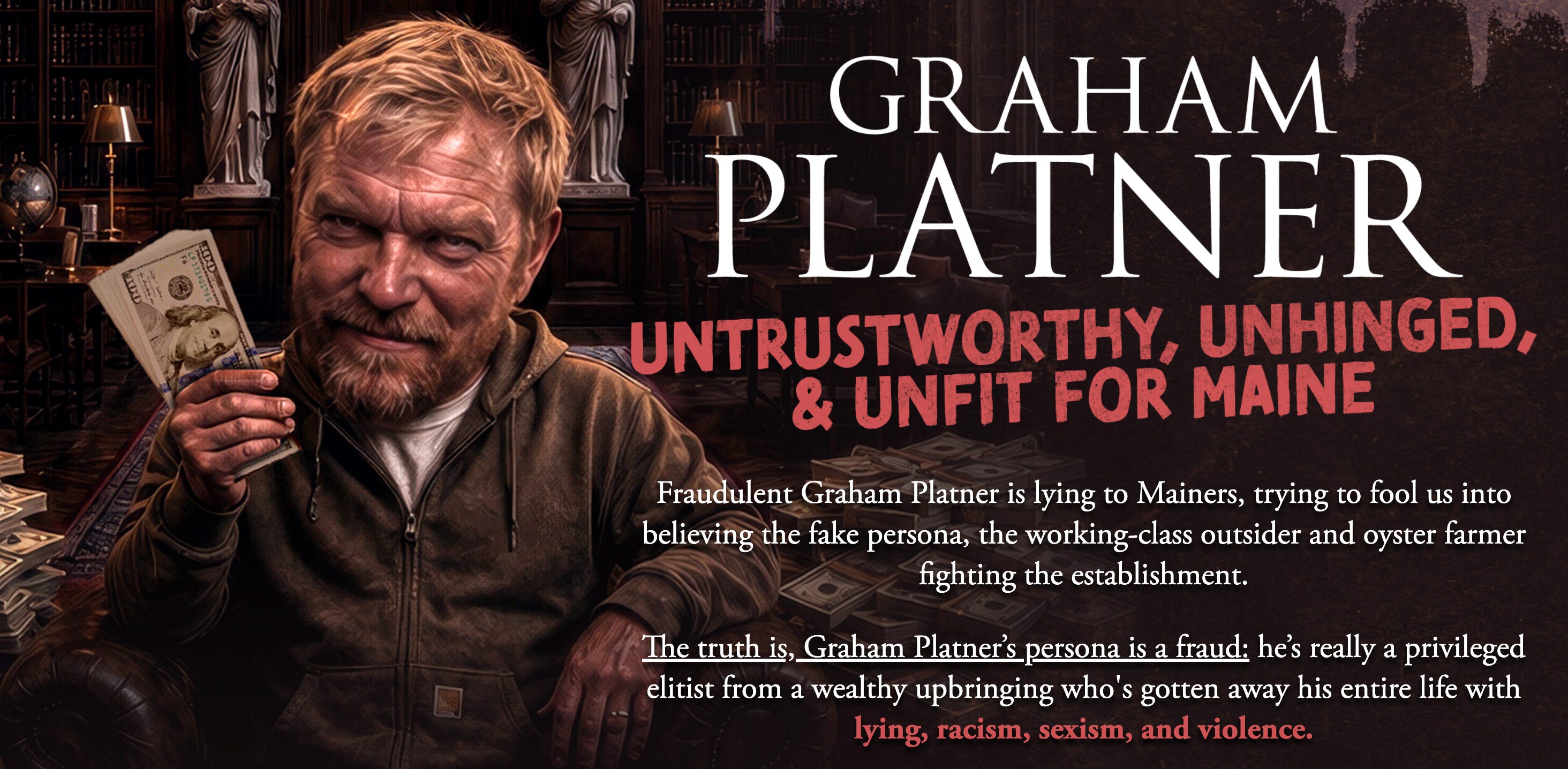
SLF is out with a pretty sweet website hitting Graham Platner up in Maine. First off: You know I love a good microsite. Second off: I literally cannot believe that in 2026 we still have campaigns (and major ones at that!) that are not buying every domain associated with the candidate’s name. How in the world did SLF get “GrahamPlatner.org”?? Anyway, it’s a nice, one-stop shop for anyone looking for the baggage on this guy. Is it a wall of text? Yes, but that’s pretty unavoidable with how much dirt there is on this lame-o fraudster of a lib. Honestly, there’s so much on this guy I’m actually a little jealous of anyone who gets to work on this race.
—Unfit for Prime Time?
Did you think I was just going say nice things about microsites this week? You know better than that! The Pamela Evette campaign was spending some ad dollars directing people to an attack site hitting Alan Wilson called CantAffordWilson.com. Ok, pretty clever. I was sure this was gonna be good.
I was wrong. Is it the worst I’ve seen? Heck no. But was I expecting a little more? Heck yes. Guys. I say this with all the love: I THINK WE CAN DO BETTER.

Alright, friends. This week’s edition is sponsored by Reset Creative. Founded by Kevin Rose (who also founded Advocacy Lab), Reset promises to use AI to create ads people actually want to watch. Nice. Below is a Q&A with Kevin - check it out!
Thanks, Kevin!
First off: Who are you and what do you do?
Hey, I’m Kevin, founder of Reset Creative. We make AI ads for campaigns - like the Spencer Pratt ones that have been going viral recently. Before this I built a platform called Advocacy Lab, so I’ve been in the campaign creative world for a little while.
AI in advertising. It’s here. How should campaigns be thinking about using it this cycle - and in 2028?
Right now the biggest thing campaigns can do is use it organically. Not only does it allow for endless creative possibilities to push your message, it has a virality to it that normal political ads don’t if they’re done right. Plus, if an ad does go viral on socials, there’s a good chance the press will pick it up and you could get a ton of earned media out of it. AI ads are a huge story this cycle, so make something good and your video can go viral AND get you a ton of press on top of it.
Looking toward 2028, we move past viral organic stuff into full commercials made with AI. The video models are basically there already - I’ve done more traditional political commercials with it for downballot candidates. By 2028 it’ll be all the way there, and the cost gap between an AI spot and a live shoot will be too big for campaigns to ignore.
Do you think there should be any limits to the use of AI in political advertising?
The guardrails should be around true, intentional misrepresentation - like an AI video of a candidate saying something they never said. Beyond that, I don’t see how this is much different from what we could always do, just way cheaper now. Assuming you’ve got the proper permissions for everything.
What’s the future for static ad creative - especially in the world of AI?
The image models are unreal now. Text rendering on the latest GPT and Nano Banana Pro models is basically perfect - which now means you can produce statics truly at scale.
On my non-political side I’m already seeing brands launch thousands of creatives a month, all hyper-targeted to unique audiences. The political version would be something like this: you build one base creative, then tweak it so every county - even every city - gets its own callout and imagery. Instead of “VOTERS: cast your ballot for [candidate] on November 5,” it becomes “Hey [City] voters, [local mayor] is backing [candidate] this cycle. You should too.” You could run that on Meta all day and you’d probably see a 5-10x greater lift than that generic creative.
What would you say to campaigns who are worried about voter backlash over AI content?
If you’re getting backlash, your creative was probably just lazy. People don’t get mad at good AI commercials. They get mad at slop. Make something people actually want to watch and nobody cares how it was made.
Anything you want to add?
If you want to offer your candidates AI ads this cycle, shoot me an email at kevin@resetcreative.co and let’s talk. Here’s an example video I just did for a campaign for reference. Thanks!


Belinda Keiser is running for Congress in Florida’s 22nd district
Trump-endorsed Pamela Evette and State AG Alan Wison will face off in the June 23 runoff for South Carolina governor
And in South Carolina’s 1st district, Jenny Costa Honeycutt will face Mark Smith in the runoff to replace Nancy Mace
In more South Carolina news, Lindsey Graham easily beat primary challenger Mark Lynch
Trump-endorsed Marty O’Donnell won in Nevada’s 3rd congressional district
Steve Hilton advanced to the general in the California governor’s race
Things are getting a little ugly in the Alabama Senate race…Jared Hudson is out with a new ad attacking Rep. Barry Moore’s military record
John Fleming is out with an ad attacking Julia Letlow over stock trading
And the knives are out for Trump-endorsed Mike Mazzei in Oklahoma

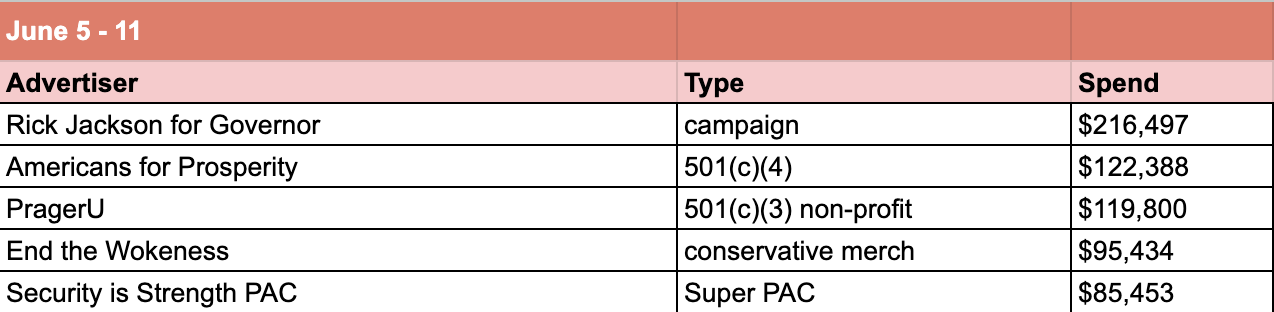
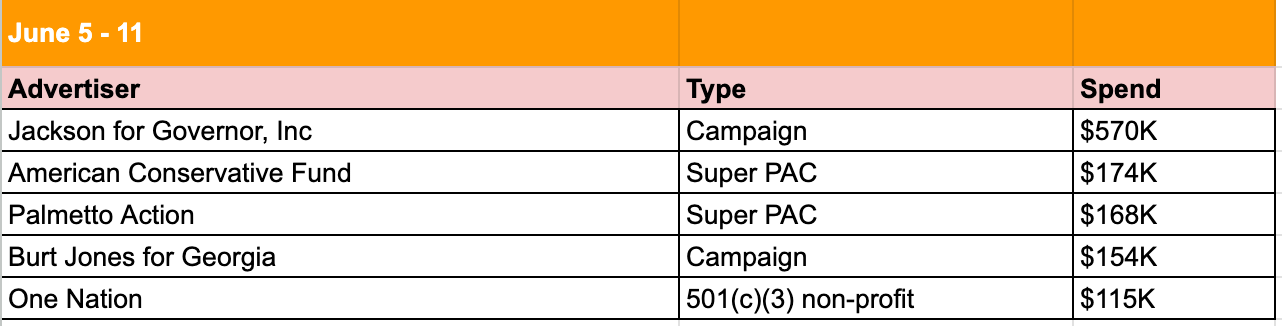

🤖 ICYMI…Apparently hackers were able to get Meta’s AI support chatbot to give them access to some high-profile Instagram accounts? Read more.
💯 Some tips when it comes to balancing frequency versus engagement on social media. No, volume and performance don’t always correlate. Read more.
🗣️ Edit’s Teleprompter tool is expanding to the Instagram app. Yay! Here’s more.
🤐 Last but certainly not least…apparently the ActBlue hearing this week went…ok? Not really? According to the New York Times, chief executive Regina Wallace-Jones invoked her Fifth Amendment right something like 22 times. I mean…what do you expect though, from someone who allegedly misled Congress already about ActBlue’s handling of foreign donations?

Jordan Lieberman is back with another issue of Vendor Trap. This time he explains how the DATA can spot a losing campaign before the consultants do. TL:DR: “The single most predictive variable in a digital program isn’t the budget. It isn’t creative or platform mix. It’s the start date.” Boom.
Adam Wise wrote in Campaigns & Elections about Publicis Groupe buying LiveRamp.
Katie Harbath wrote about the political divide in campaign AI use.
A little piece of gossip: A couple weeks ago I wrote about a group called 2026 Victory Committee and talked some smack about them sending out 50x impact fundraising emails (but did give them credit for their sweet WinRed page!). Anyway, according to one anonymous tipster, Launchpad is the vendor responsible and it’s actually Bo Hines’ former campaign committee trying to pay down some debt. Hhhmmm…
Got a tip for The Grapevine? Job announcement? Job opening? Email ‘em to me at itsthedoomscroll@gmail.com

From the other side of the aisle:
It’s a tale as old as time: One agency. One poor, overworked staffer. Multiple clients. Multiple X accounts… (This is literally my worst nightmare, btw)

From the other side of the tracks:
Ok…this story made me (and a lot of people) scratching my head. A makeup company called The Ordinary attempted a marketing stunt that involved ::checks notes:: offering free bus rides to people in NYC? What does that have to do with selling makeup, you ask?
I’m asking also. Apparently The Ordinary, which sells relatively cheap products, is trying to position itself as THE provider of affordable makeup in a city where the cost of living is extraordinarily high. Still, free bus rides to make that connection between affordability and selling makeup seems like an awfully big stretch, and I’m not surprised the stunt got shut down. Side note: if you’re going to do something like this, you should at a minimum be able to execute?
Out-of-the-box ideas are great. But they have to make sense, no? Just asking.

Before you go…
Did you answer this week’s One Question? It takes five seconds!
Access the Doomscroll archive here.
Consider forwarding Doomscroll to your friends!